Srushti Pokerna

Sesame
Workshop

How does an institution built on principle stay relevant in a world that rewards noise?

BrandingStrategy

Role// Led the parent interviews, cultural research, financial audit and story outline. Contributed to brand identity.

Team// AJ Nielsen, Dyna Rivera, Rhea Saura

Year// 2025

Context

Sesame Workshop has spent 55 years teaching children that the world is worth showing up to. It pioneered the idea that television could be a force for human development — building a brand on principle, not profit.

Today, that principle is under pressure. A $40 million deficit, federal funding cuts, and a culture treating screen time as the new secondhand smoke have left the institution at a crossroads. The financial crisis is real, but it's a symptom of a deeper cultural one: in a world drowning in passive content and anxious parents, the brand that taught a generation how to feel risks becoming a nostalgic relic rather than a relevant force.

Research

The strategic foundation was built on three streams of primary work:
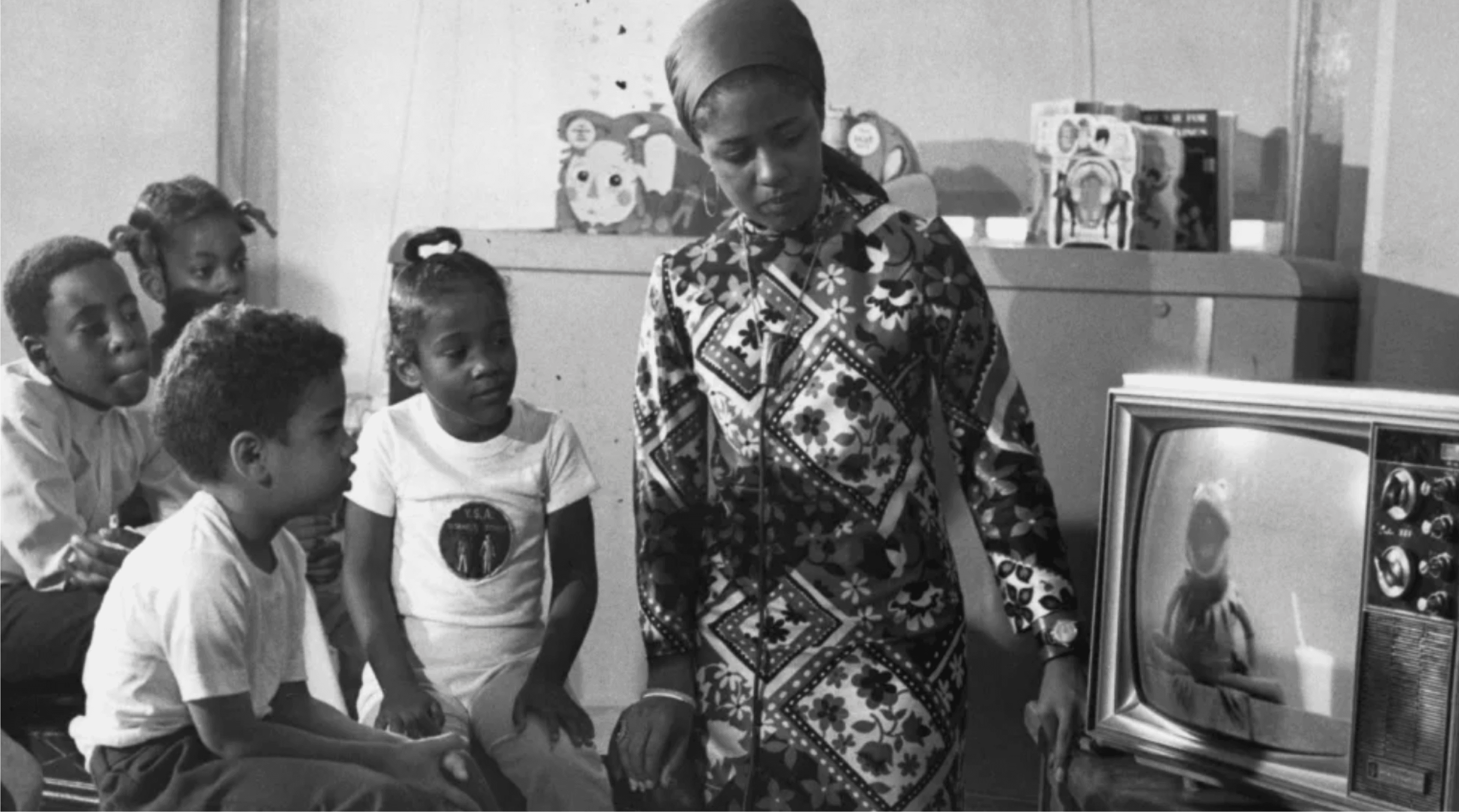
Brand AuditFinancial AuditParent InterviewsOn-Site visit
Cultural evidence

Cultural Evidence

75%

of parents say screen time is their biggest parenting anxiety (Common Sense Media, 2024)

$40M

projected deficit for Sesame Workshop without intervention (NYT, 2024)

3.5 hrs

average daily screen time for children under 8 (American Academy of Pediatrics, 2025)

"I feel guilty every time I hand him the iPad. But I also need 20 minutes to make dinner."

— Parent of 4-year-old, Brooklyn

The research surfaced the human truth at the centre: parents don't just want content that entertains their kids. They want content that makes them feel like good parents for choosing it.

Opportunity

Sesame Workshop is in a unique position based on its history, trust, and equity to reclaim screen time as a vehicle for accessible and engaging media that benefits children.

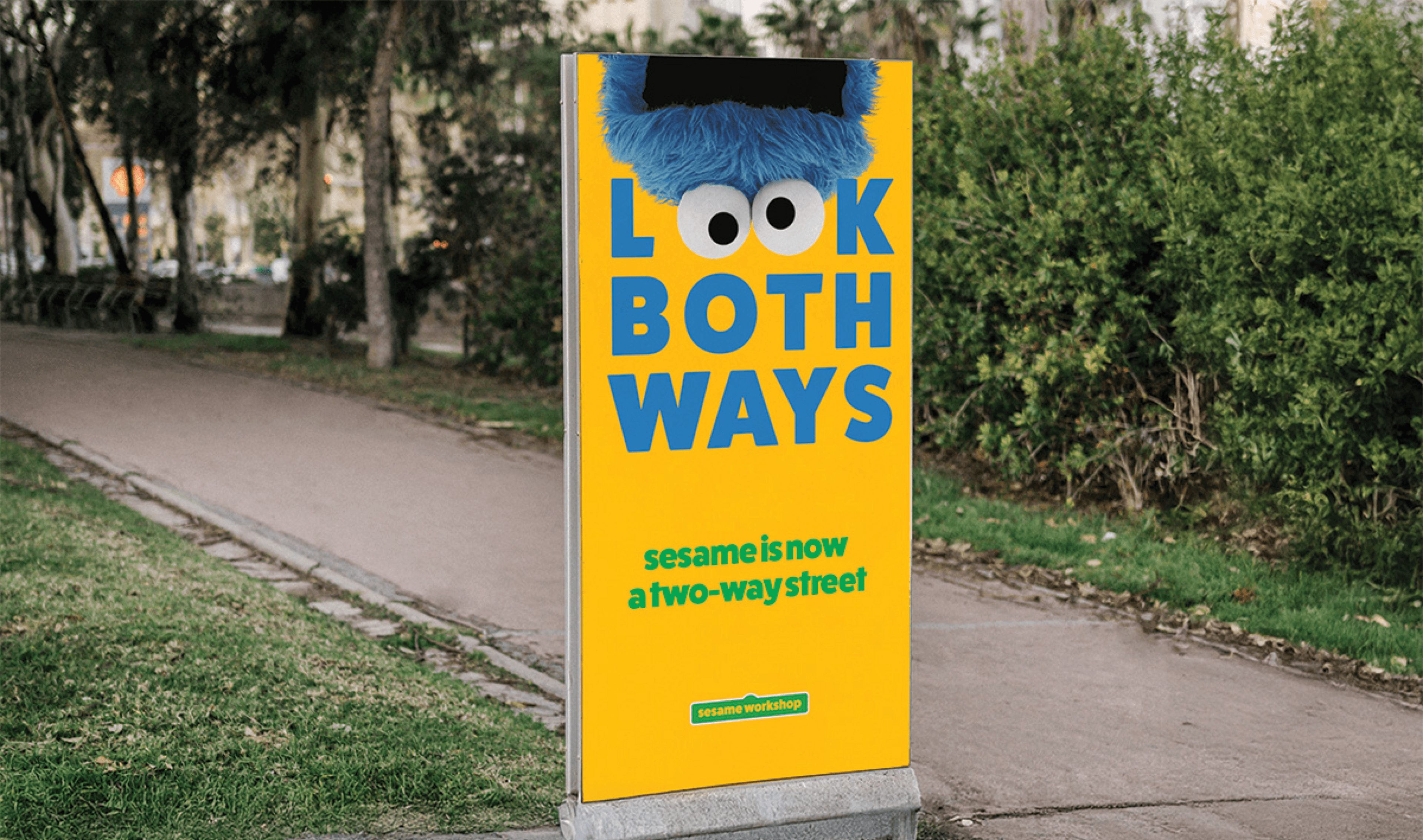
To reclaim its cultural authority, Sesame Workshop must become a two-way street — where families don't just watch, they participate.

Sesame is now a
two-way street.

Sesame Workshop

Three Territories

Participate

Digital Platform. Reimagining the screen as a launchpad for two-way engagement, not passive consumption.

Create

Physical World. Extending Sesame's mission into the moments of family life that happen off the screen.

Think

Civic Engagement. Teaching children to participate not just in play, but in conversation, debate, and the world they're inheriting.

Participate

Sesame Go

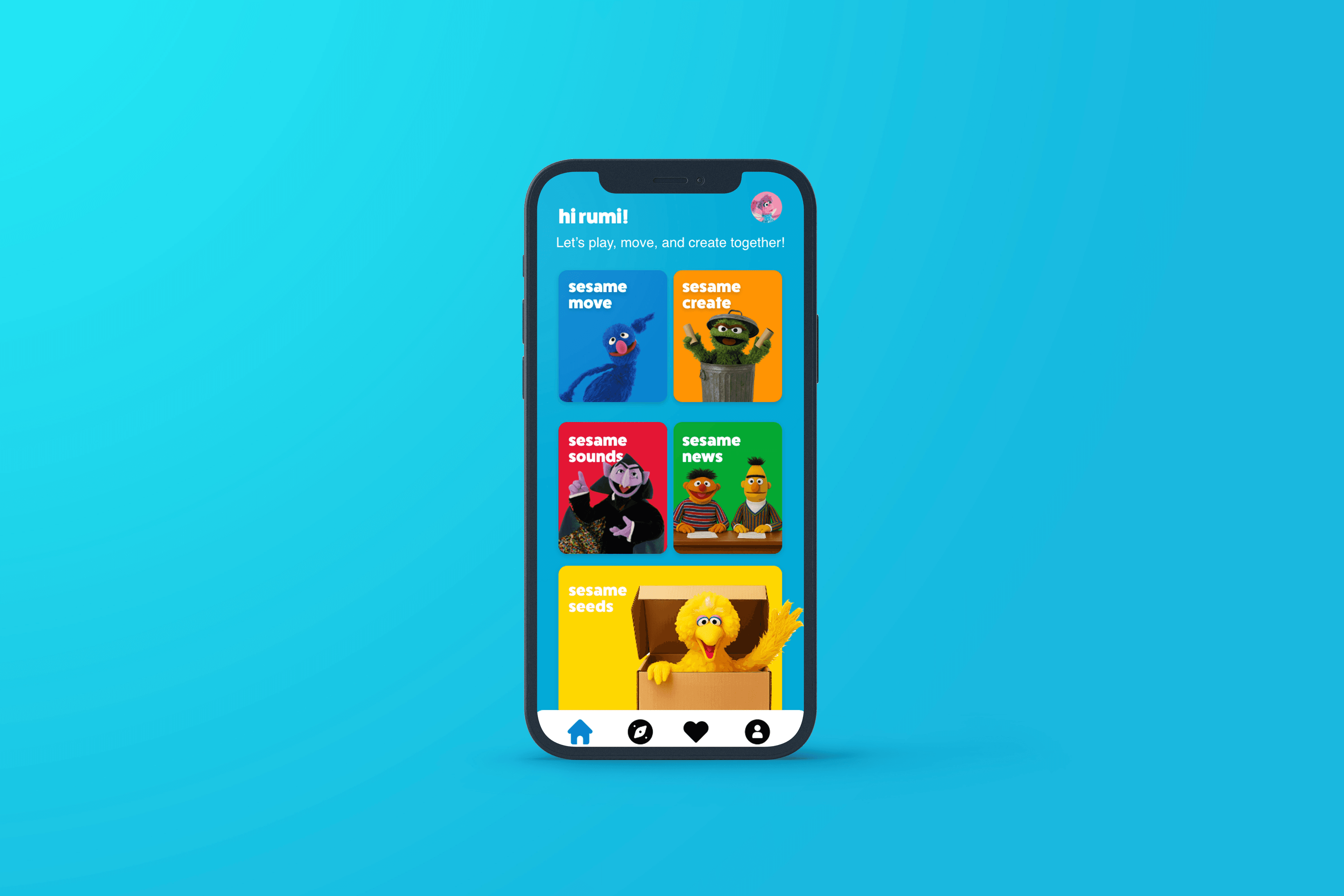
Sesame Go is the centralised home for all of Sesame's offerings — a launchpad for enriching, participatory experiences built around a core belief: that learning is not passive, but participatory. The screen becomes a two-way street.

The platform supports three developmental cohorts — Toddlers (2), Preschoolers (3–5), and Early Elementary (6–8) — with parents personalising content to their child's stage. Content categories reflect different modes of learning and interaction, designed to be both educational and participatory.

Sesame Go app

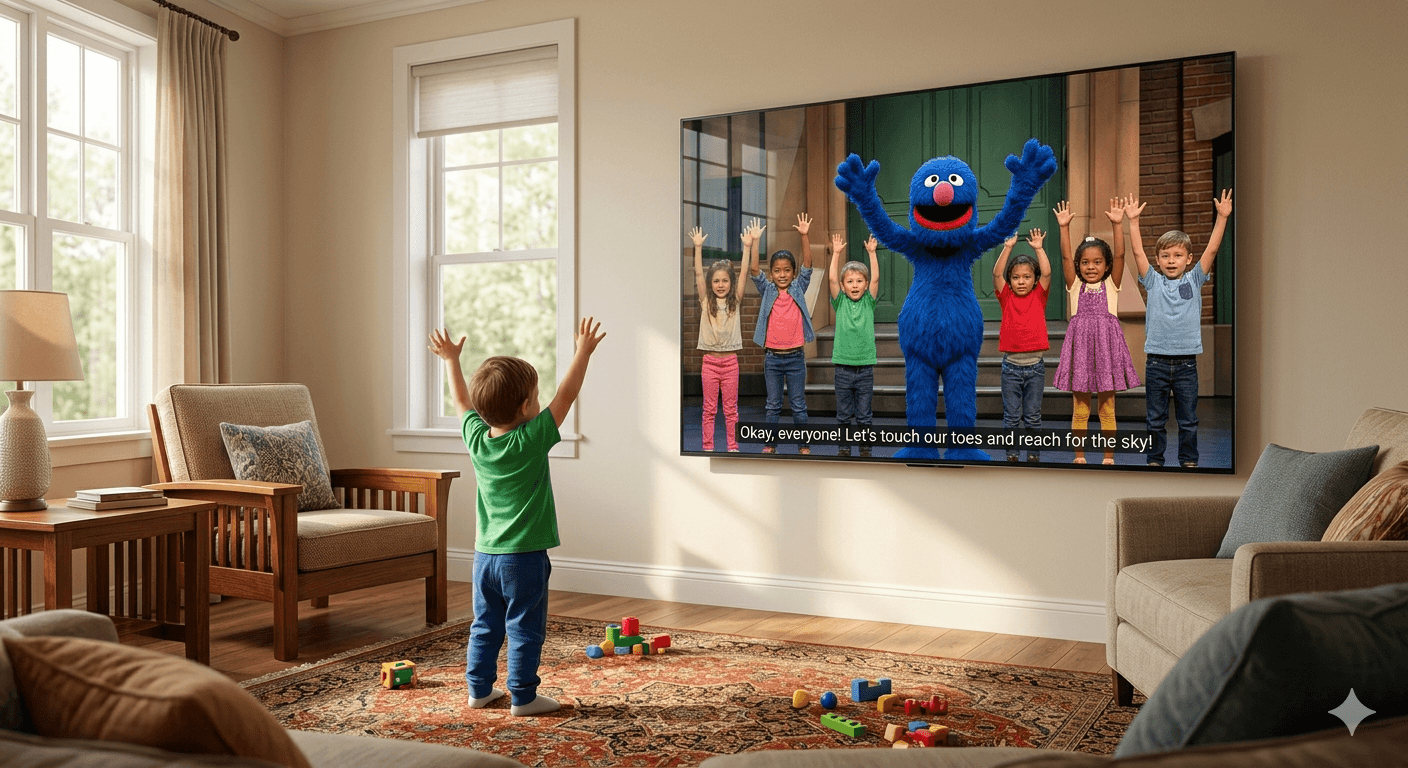
Sesame Move

Grover guides children through structured movement sessions that support executive function, coordination, and self-regulation. Passive screen time becomes active physical engagement.

Sesame Move

Create

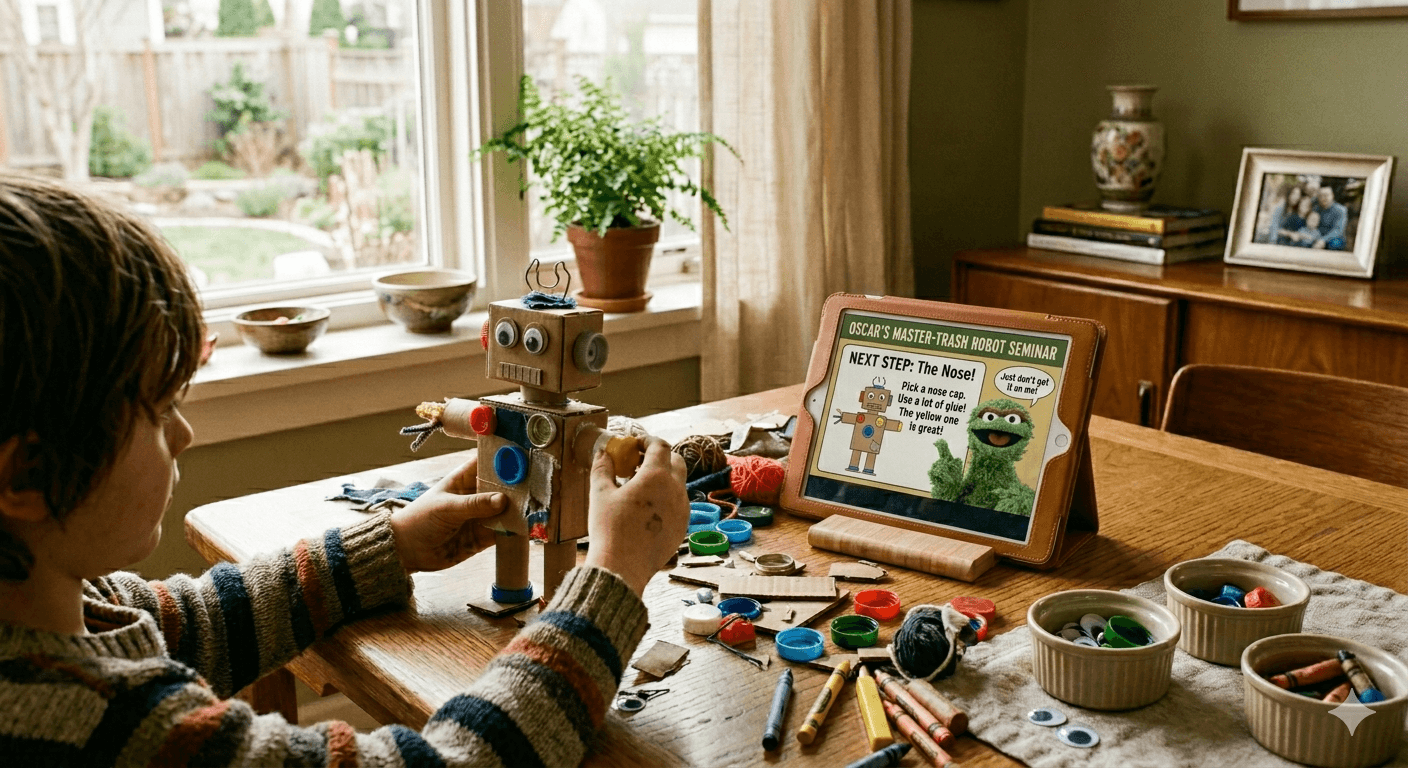
Sesame Create

Oscar the Grouch guides children in turning household "trash" into meaningful "treasures." Creativity, problem-solving, and resourcefulness — turning passive inspiration into active making.

Sesame Create

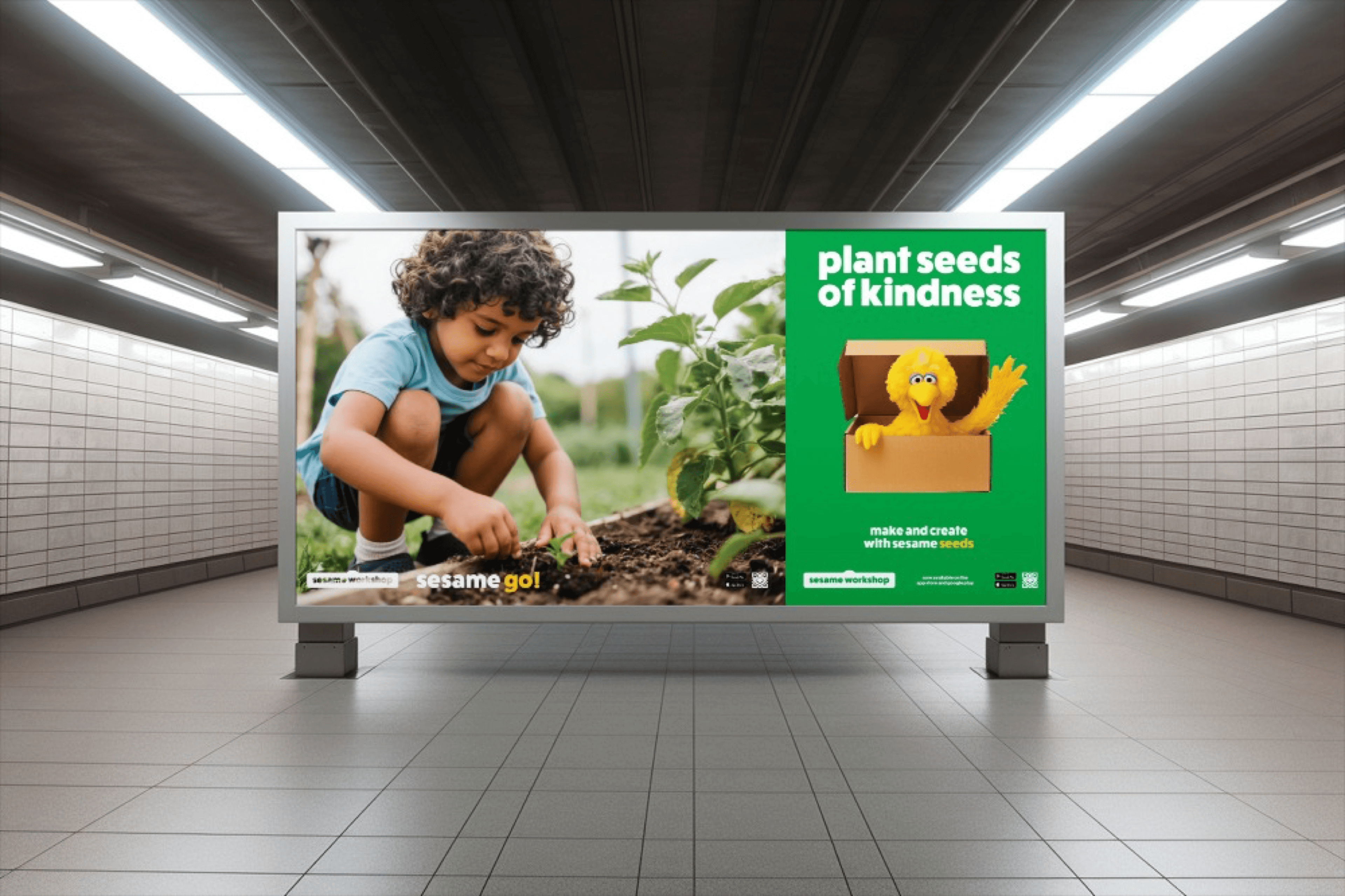
Sesame Seeds

A seasonal subscription box that turns values into action. Big Bird guides families through growing a garden, writing thank-you notes, and showing appreciation. Kindness is rooted in practice, not just in principle.

Sesame Seeds

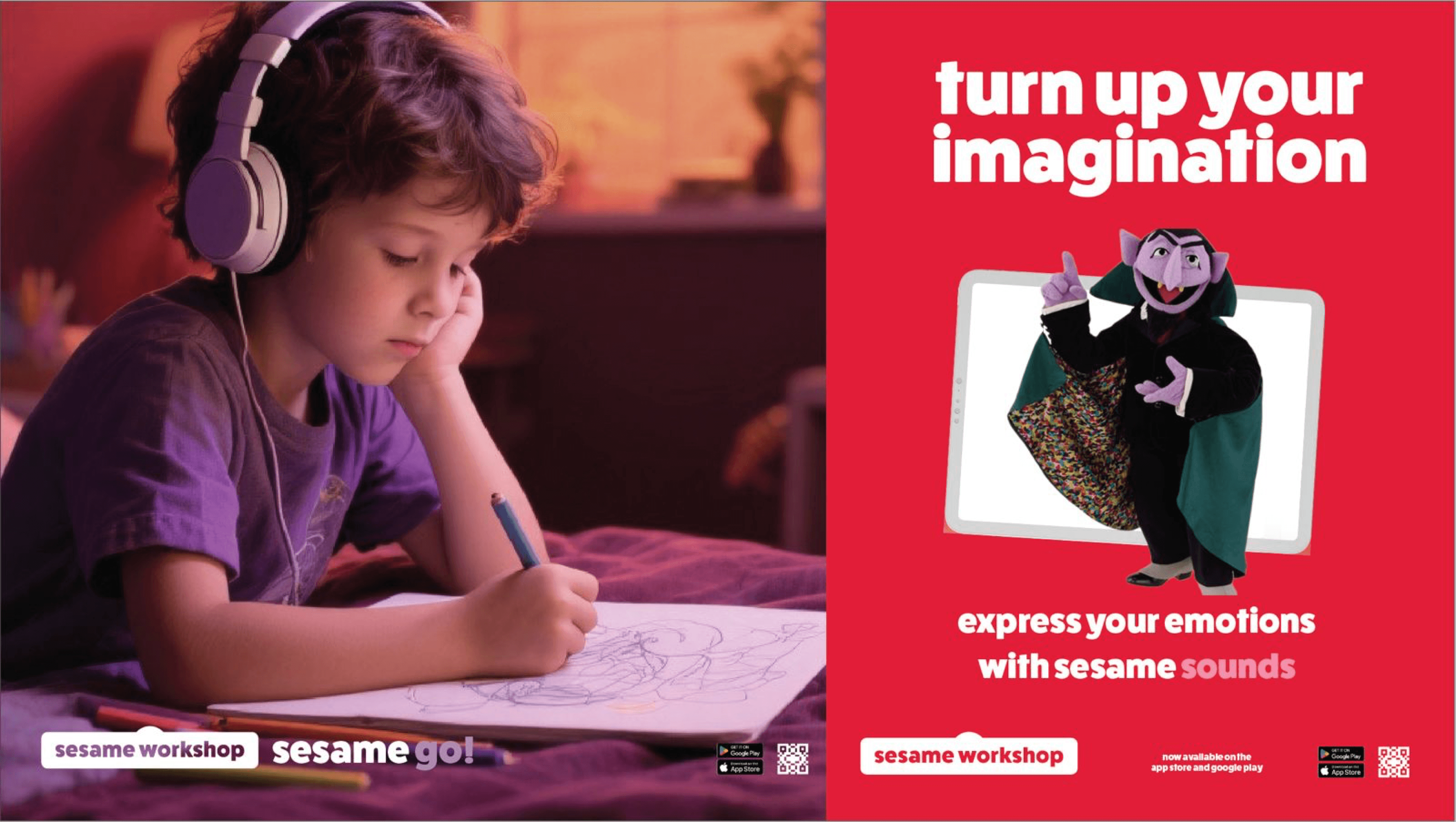
Sesame Sounds

A screen-free podcast experience hosted by Abby Cadabby. Children draw what they hear, reflect on what they feel, and share their finished drawings — transforming listening into dialogue and self-expression.

Sesame Sounds

Think

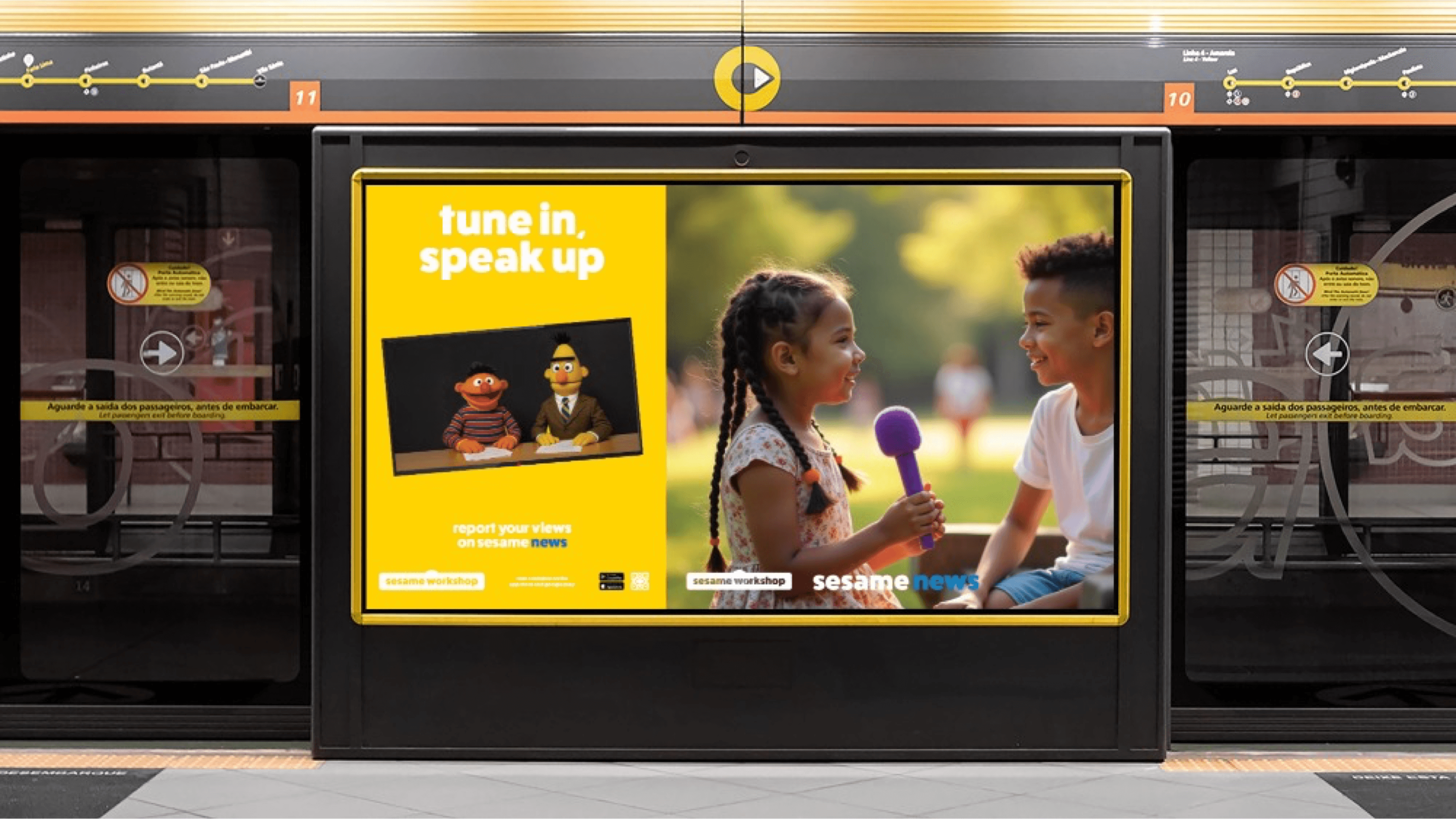
Sesame News

A weekly editorial series helping children make sense of a complex world. The opening segment — That's Debatable — puts two real kids in a five-minute debate hosted by Muppet Guy. Children aren't passive recipients of information. They're active participants in developing their own point of view. Each segment is designed to encourage critical thinking, thoughtful reflection, and respectful dialogue.

Sesame News

View the full thesis presentation here.

Next project